Steps to a Better Understanding of Organizational Agility
Table of contents
Talking about organizational agility isn’t just relevant, it’s necessary. Not long ago this term wasn’t very popular. Few people even understood the problem behind scaling - that is, taking agile management principles and values to an organizational scale. In some contexts you’ll hear the term hyperagility .
In this series of articles on basic management concepts, today it’s the turn of Organizational Agility. What is organizational agility? Why does it matter? And what’s the difference between “being agile” and “being agile at scale”? Here’s how I see it.
The agile movement and the generational handover
https://www.youtube.com/watch?v=g9VW2ipXmg0
Some time ago I argued in a webinar that agility was so relevant to our time for one key reason: the generational handover forced new battles - among them, adopting new and different ways of managing teams. The people who make up today’s workforce need organizational agility more than ever. That doesn’t mean other generations can’t benefit, or that a last-century invention like agility hasn’t added value in many different contexts, for many people and organizations. What I’m saying is that its current boom owes a lot to this generational shift.
Defining Organizational Agility
Organizational agility is the ability of organizations to master continuous change . This lets organizations thrive and grow in a world that’s increasingly volatile, uncertain, complex, and ambiguous - a combination of words known as V.U.C.A. environments.
Given that, you should understand that organizational agility is closer to concepts like efficiency and effectiveness, and less about speed and rapidity. You’ve probably heard plenty of people and companies skip the nuance and just assume being agile means doing everything “more”: faster, cheaper, quirkier, more fun.
Better Organized Through Agility
Agile organizations are still organizations. That is, they have a mission, goals, plenty of projects, and of course, an operation to run. But above all, organizations are made up of PEOPLE. In an agile organization:
- Work doesn’t disappear or shrink. Organizational agility promotes better ways to group and coordinate people to face an uncertain environment - remember V.U.C.A.? This improves response times and the ability to adapt to opportunities or threats.
- Less stress when you size the work ahead. Since teams have clear goals and a clear “job to be done,” there’s less anxiety - targets are set based on capacity, not wishful thinking. This lets you self-organize.
- People feel better about their work. This happens as organizational agility matures inside the company. Experience takes time, and people feel more confident in their abilities as an agile mindset takes hold of the organization, its governance structures, and, of course, its people.
The path to organizational agility
Here are some tips to become well-versed in organizational agility. A roadmap, plus some of my favorite books, articles, and videos.
Step 1: Know and understand
I’ve been a university professor for more than 20 years. I was lucky enough to find teaching early in my professional life. Although I started with topics related to software development, today I focus on talent management, projects, and technology-related innovation. So, guess what my first piece of advice is going to be: study.
Trying to be an expert in something you haven’t even read a book about is an insult - to yourself and to everyone around you. It saddens me to see fake experts who, with a few videos, little reading, and no real study, preach in their professional lives as if they had tons of experience. And we’re full of examples of experts without experience - which, in case you didn’t know, is what’s considered an oxymoron. So if you’re one of mine and you like to study, read, and research, let me point you to a few things you can learn from without spending much money.
Far from an exhaustive list, here’s a small group of recommendations to get started that I think are quite valuable.
On agility and innovation
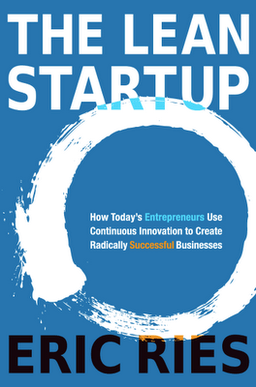
The Lean Startup
This book by Eric Ries is excellent and lays out clear concepts on how to “build” within and outside organizations. It makes the concept of the Minimum Viable Product (MVP) crystal clear, along with the importance of iterating to validate business hypotheses early.
You can visit The Lean Startup website or buy the book on Amazon .
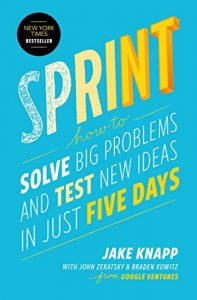
Sprint: How to solve big problems and test new ideas in just five days
An excellent book by Jake Knapp that lays out how a very focused, capable team - similar to a Scrum team - can generate ideas and validate them quickly before investing in them.
The book is a super recommended read for anyone who wants to generate ideas and build incubation processes inside organizations.
Agility and Management
Life takes strange turns. Coding - writing source code to build software - is something I’ve been passionate about since I was a kid. There isn’t a month that goes by where I don’t research something about software development, or start an online course - I admit I’m good at starting, not so much at finishing. From my days as a developer, I remember the lack of respect for coordinators or managers. Without going into details, I admit that many of those “leaders” limited themselves to following up on tasks. Still, there were exceptional managers I not only admire, but who were a huge influence on my professional life.
But as teaching started to influence my work as a developer, my skills for coordinating teams improved. Today I respect and admire both professions. Both are worthy, necessary, and complementary. And although I never had many options as a developer - because my communication skills always mattered more to my employers than my coding abilities - today I know there’s a whole universe of roles and responsibilities for those starting out now.
Here’s a list of books that changed how I see management and the work of managers.
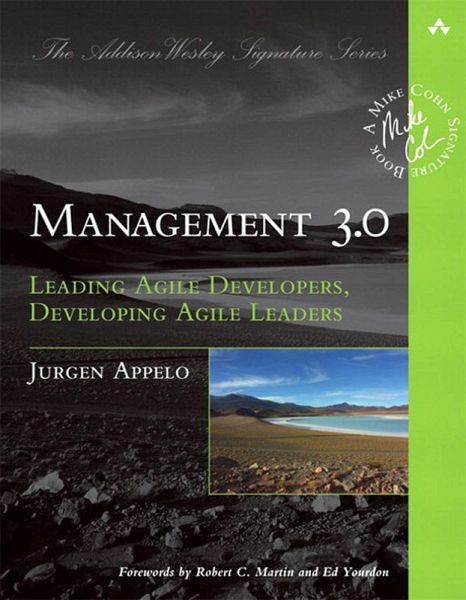
Management 3.0
A classic by Jurgen Appelo, Management 3.0. It’s somewhat philosophical, and at times feels like Jurgen’s personal catharsis. That’s probably why he later released more practical books.
The book Management 3.0: Leading Agile Developers, Developing Agile Leaders lays out a clear case for the urgency of agility and the evolution of management. These days, Jurgen leads the Happy Melly initiative and a genuine organizational transformation effort.
I want to say I love what Jurgen does, but I think it’s limited by scale - meaning, these are great ideas, hard to put into practice in large organizations. The book also talks about agility, but not much about “organizational agility” or what we technically call “scaled agile.”
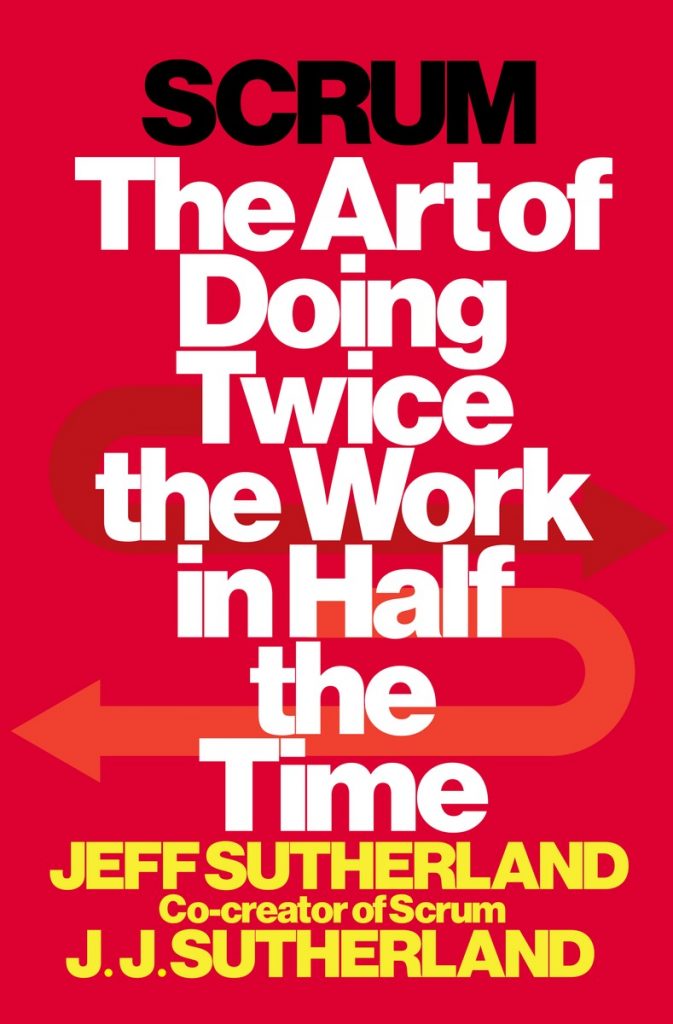
Scrum: The Art of Doing Twice the Work in Half the Time
A book by one of the so-called “fathers of Scrum” - the software development methodology that revolutionized countless teams and organizations, and has evolved well beyond IT.
This is an excellent book, with the same problem as everything that uses the name SCRUM. A flashy, sellable title, with few real details. Who wouldn’t want to do twice the work in half the time? Though the title never clarifies “at what cost.”
Scrum is, without a doubt, an excellent management model for small teams that, far from solving every problem in the corporate world, is an important part of organizational or scaled agility.
Now, Jeff, and his sellable titles, is as much to blame for the mediocre hype around Scrum as every certified Scrum Master with no experience who has no idea how to work with people. Jeff himself said in a recent interview that 80% of Scrum implementations are garbage.
The Project Management Institute’s Agile Practice Guide
I never get tired of saying it, PMI always arrives late to the party, though credit where it’s due - it always shows up eventually. Of course, in this “agile frenzy,” PMI played its card - and I admit I took part in building, translating, and releasing the Guide.
This is a small, pretty generic book about the general concepts of applying agile practices to project management. Without being a sacred text the way the PMBoK is for PMI fans, it’s an excellent primer on the topic. Not surprisingly, the work was done together with the Agile Alliance.
Of course, there are thousands of books, readings, videos, and even podcasts with valuable information out there. I invite you to share your own suggestions in the comments.
Important note for the Agile Fan Boys and the Hippie Agile Coaches out there. This whole mediocrity-and-hype problem isn’t a Scrum thing. It’s a general fads problem (what Jurgen calls “Management 2.0, or Fads”). Those of us who’ve been around consulting a while longer know it’s unavoidable. Whenever a topic becomes relevant and offers improvements or solutions to the organizational challenges of its time, we get pioneers, true experts, and, the vast majority, people who arrive at the topic out of “necessity” or “business,” not genuine interest.
Step 2: Assess the context of application
Think about the organization or work structure that will support the goals you want to tie to an Agile Evolution. Organizational agility requires a plan. Knowledge without an action plan is just another book on a library shelf. You need to put that knowledge into action. To do that, you need to think about the people who’ll be with you throughout the process.
You need to determine the objectives and goals to achieve, and the organizational capabilities needed to make it possible. You need to ask yourself:
- What capabilities and specific knowledge about your industry or your company are needed?
- Who should participate actively, decisively, and with focus?
- Who should keep doing their day-to-day work while also supporting this new effort?
- How will the current operation and the ongoing transformation process coexist? There are models that claim to offer absolute solutions - like SAFe . This is an experimentation process specific to each company. What matters is failing fast and cheap to guarantee timely learning.
2026 update: SAFe now promotes “AI-Native SAFe,” bringing generative AI into planning and coordination at scale. As with Management 3.0 and M3K, the framework’s tools change - the underlying need to coordinate people doesn’t.
What matters: don’t fool yourself. The same people with the same assignments and workload can’t take on a brand-new, major responsibility. Tell operations (bringing food to the table) apart from evolution (making sure we can keep bringing food to the table in the future). Remember that if you assign the same people, operations will always win out over evolution in the short term.
Step 3: Act accordingly
This process is an investment, and you’ll almost certainly see a negative impact on productivity in the short term. Understand what it means to change how people think, feel, and act toward their work, the organization, and the people around them.
If it’s hard for an executive, imagine what it’s like for those lower down in your company’s structure. Everyone wondering what the hell is going to happen with this change. If you feel fear, that’s normal. If you resist, that’s normal too - you’re stepping out of your comfort zone.
Advice: If you want to go fast, go alone. If you want to go far, build a team.
In a major effort, you shouldn’t waste anyone’s valuable time on avoidable mistakes. Get consistent support over a defined period of time, with clear goals. Build the internal capacity to be self-critical, so you can correct course when needed. Seek outside support from a consultant, or bring in people with experience from other companies. Look for experience, rigor, and passion in people. Commit to it - “if you can’t be all in, don’t send anyone.”